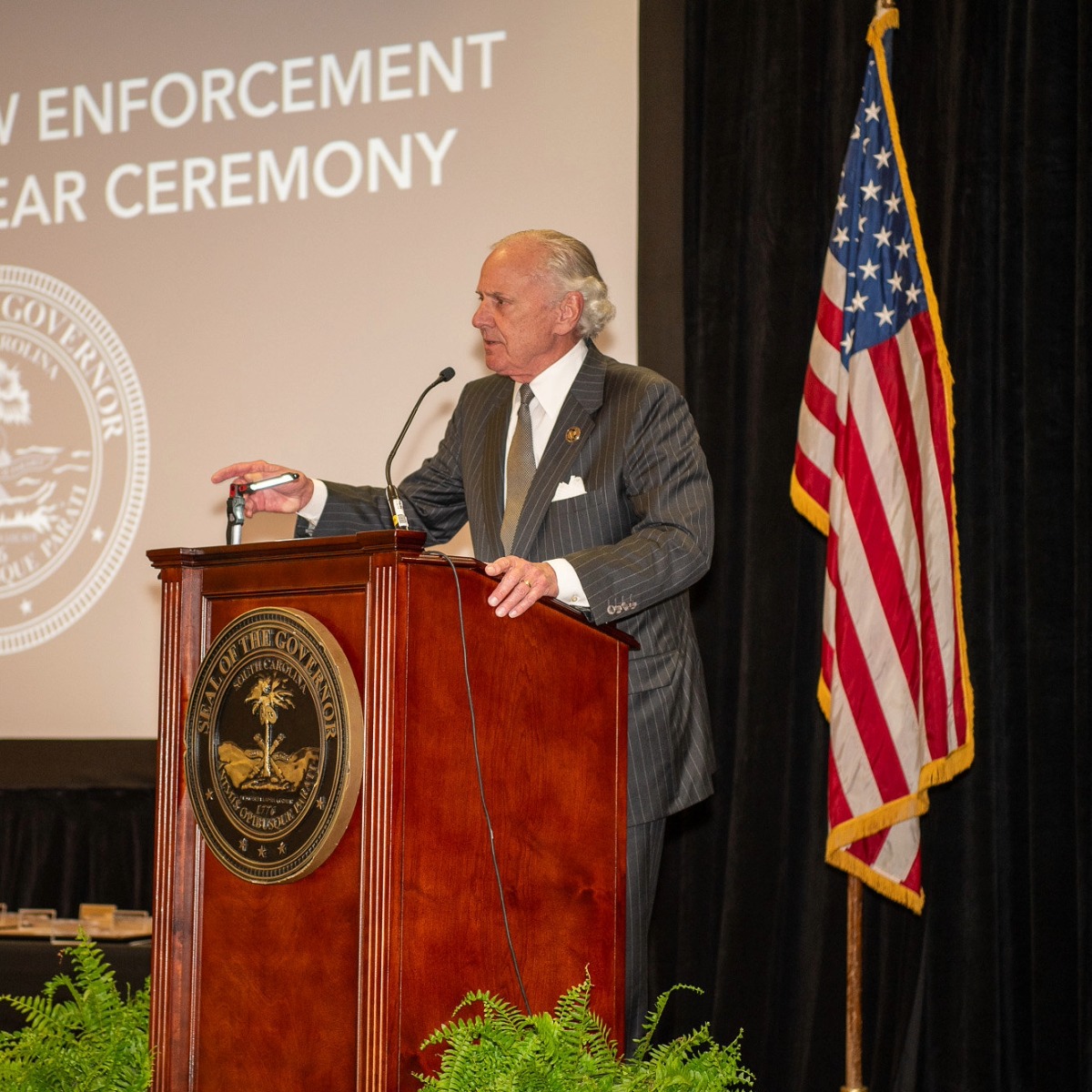
Governor Henry McMaster honored three officers as the 2025 statewide winners in the State, County, and Municipal categories. Each recipient received a $10,000 award as part of the Governor’s Law Enforcement Officer of the Year Award program.
The annual program recognizes law enforcement professionals who demonstrate exceptional professionalism, dedication to duty, community service, valor, and innovation in the profession.
South Carolina is fortunate to have the best law enforcement officers in the country.
Governor Henry McMaster
“South Carolina is fortunate to have the best law enforcement officers in the country. Their work is essential to keeping our communities safe and too often goes unrecognized,” Governor Henry McMaster said. “This ceremony gives us the opportunity to honor the hard work they do every day to serve the people of our state with bravery and integrity.”
The South Carolina Department of Public Safety administers the award program through an advisory committee composed of law enforcement leaders appointed by Governor McMaster. The committee reviews nominations submitted by South Carolina law enforcement associations and selects one overall winner in each category.
The South Carolina Fraternal Order of Police is honored to serve as part of the selection process recognizing officers whose service reflects the highest standards of professionalism and commitment to their communities.
Eleven finalists from agencies across South Carolina were selected for recognition during this year’s ceremony.
State Finalists
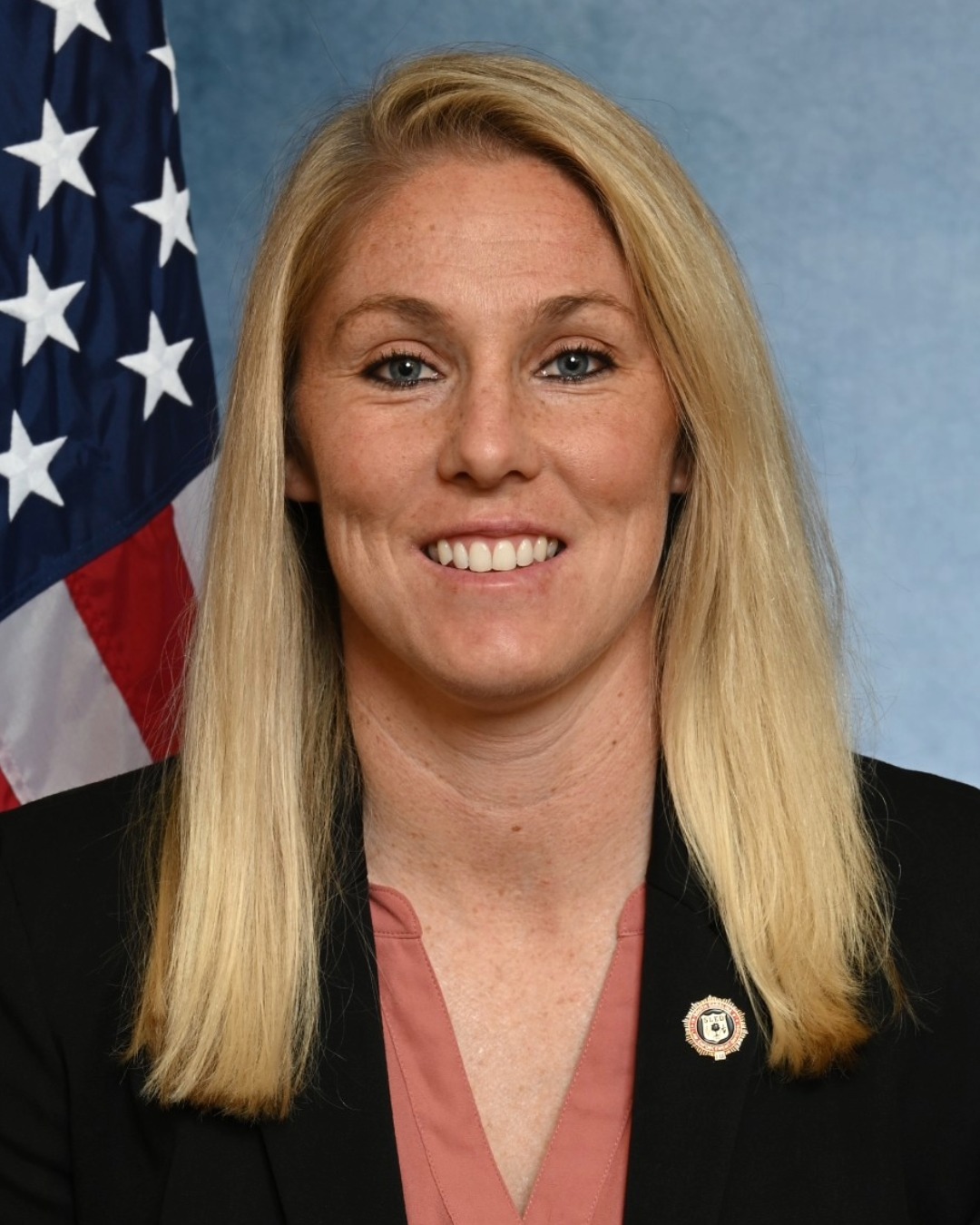
Lieutenant Jamie Shaw, South Carolina Law Enforcement Division
The Governor’s Law Enforcement Officer of the Year program continues to recognize the professionalism, service, and leadership demonstrated by officers across South Carolina each day. The finalists and award recipients represent agencies and communities throughout the state and reflect the continued commitment of South Carolina law enforcement to public service and public safety.
Each May, Police Week is observed across the United States as a dedicated period to honor law enforcement officers who have lost their lives in the line of duty and to recognize those who continue to serve. In South Carolina, this week is marked by coordinated observances across the state, bringing together agencies, families, and communities in a shared act of remembrance.
In 1962, President John F. Kennedy signed legislation establishing May 15 as Peace Officers Memorial Day and designating the calendar week in which it falls as National Police Week. That framework continues to guide how this week is observed at every level. In South Carolina, both the House and Senate have formally recognized Police Week by resolution, affirming its importance to the state and to the law enforcement profession.
The Fraternal Order of Police plays a central role in that observance. Since its founding in 1915, the FOP has helped lead national recognition of Police Week while supporting officers and their families year-round. Here in South Carolina, the South Carolina Fraternal Order of Police remains actively engaged in ensuring that the service and sacrifice of fallen officers are honored with consistency, dignity, and purpose.
That responsibility is shaped by the realities of the past year.
Across South Carolina, officers have lost their lives in the line of duty under circumstances that reflect the risks present in every aspect of the profession. These incidents occurred during traffic stops, responses to calls for service, and while operating on the state’s roadways. Each loss is felt far beyond the moment it occurs.
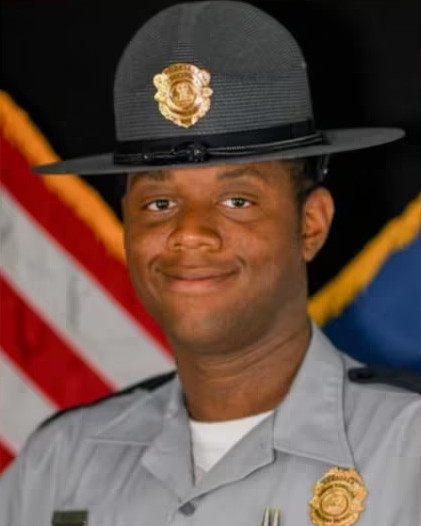
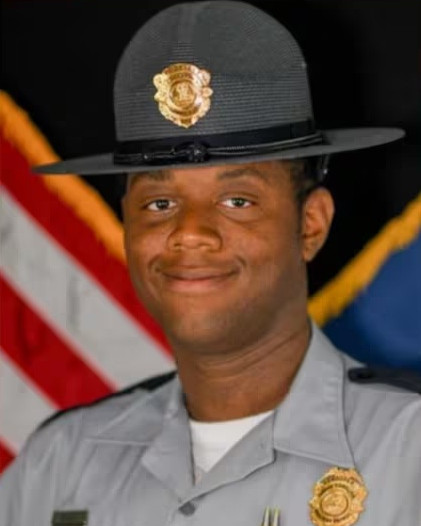
Trooper Dennis Ricks
South Carolina Highway Patrol End of Watch: August 13, 2025
Trooper Dennis Ricks was critically injured during a traffic stop on Interstate 26 near mile marker 166 in Orangeburg County in the early morning hours of August 10, 2025. After initiating the stop, he was walking back toward his patrol vehicle when he was struck by a passing box truck.
He was transported to Trident Medical Center in North Charleston with severe injuries, including traumatic brain injury and multiple internal injuries. Despite continued medical care, he succumbed to those injuries three days later.
Trooper Ricks had served with the South Carolina Highway Patrol for nearly two years. He is survived by his wife.
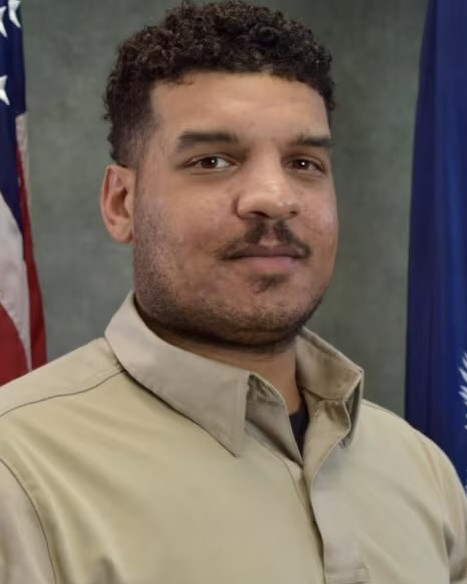
Deputy Sheriff Devin Mason
Darlington County Sheriff’s Office End of Watch: July 1, 2025
Deputy Sheriff Devin Mason was killed while responding to a call for service in Darlington County during the early morning hours. On arrival, deputies located a woman with outstanding warrants outside the residence and took her into custody. While continuing the investigation inside the home, deputies encountered resistance from a suspect who was hiding within.
As Deputy Mason approached a closed bathroom door, the suspect opened fire. Deputies returned fire during the exchange. Deputy Mason was mortally wounded at the scene. Another deputy was injured and transported to the hospital in stable condition.
Deputy Mason had recently completed field training and had served with the Darlington County Sheriff’s Office for just over three months. He is survived by his son, his mother, his stepfather, and his fiancée.
Deputy Sheriff Nate Ansay
Florence County Sheriff’s Office End of Watch: March 31, 2025
Deputy Sheriff Nate Ansay was killed in a vehicle crash while on duty in Florence County. The collision occurred on U.S. Highway 301 near Effingham during the afternoon hours, when his patrol vehicle was involved in a head-on crash with another vehicle.
Deputy Ansay was transported to a local hospital, where he later succumbed to his injuries. The other driver was also hospitalized.
Deputy Ansay had served with the Florence County Sheriff’s Office for over one year.
These officers are remembered not only for the circumstances of their deaths but also for their commitment to serve. Their absence is carried forward by their families, by the agencies they served, and by fellow officers who continue the work each day.
Observances across South Carolina began earlier this month with memorial events in Charleston, Berkeley, Dorchester, and Colleton Counties, as well as at the Statehouse in Columbia. These ceremonies, supported and attended by members of the South Carolina Fraternal Order of Police, set the tone for a week of remembrance that continues across the state.
Additional observances will take place in the days ahead:
These events bring together officers, families, and community members to honor the fallen in a setting that reflects both respect and unity. The South Carolina Fraternal Order of Police, through its local lodges and statewide leadership, continues to support and participate in these observances to ensure that each name is remembered.
Police Week in South Carolina is also connected to national observances in Washington, D.C., where members of the Fraternal Order of Police and survivors from across the country gather for the Candlelight Vigil, the National Peace Officers’ Memorial Service, and related events. South Carolina will be represented among them, standing in solidarity with the broader law enforcement community.
While these ceremonies are concentrated within a single week, the responsibility they reflect does not end when the events conclude. Law enforcement officers across South Carolina continue to report for duty, respond to calls, and serve their communities with the understanding that risk remains part of the profession. Police Week brings that reality into focus while providing a structured time to recognize those who have paid the ultimate sacrifice.
The South Carolina Fraternal Order of Police stands with those families, with the agencies represented across this state, and with every officer who continues to serve. The responsibility to remember is not symbolic. It is carried forward in how we honor their lives, support those they left behind, and continue the work they began.
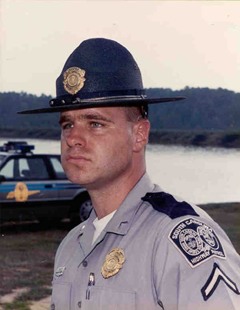
Those were the first urgent words that carried across the radio on the night of November 20, 1992. Seconds later, Trooper First Class Mark Hunter Coates’ voice rose in panic as he fought for his life on the shoulder of Interstate 95. The dispatcher heard the strain, the fear, and the determination of an officer trying to survive an encounter that had turned violent without warning. Every Trooper who has listened to that recording has felt the impact of those final moments. It is a call no one forgets.
What happened that night has been studied in classrooms, briefing rooms, and academies across the country for more than three decades. But before that night became a training video, it was the final chapter in the life of a man who had already lived a life of service.
Mark Coates grew up in Irmo, South Carolina, where he played football and graduated from Irmo High School in 1980. He joined the United States Marine Corps, earning the title Marine before returning home and serving as an EMT and paramedic in Lexington County. He understood emergencies long before he put on a Highway Patrol uniform. He knew what fear looked like. He knew what urgency felt like. He knew what it meant to stand between danger and the people who needed help. He carried that understanding with him when he joined the South Carolina Highway Patrol in 1987.
Trooper Coates spent his first years in Greenwood County before transferring to Newberry County. By 1991, his skill and drive earned him a spot on the newly created Aggressive Criminal Enforcement Team. In just over a year, he made dozens of drug arrests, recovered stolen vehicles, captured fugitives, and helped pull significant amounts of drugs and cash off South Carolina roads. His instincts were sharp. His work ethic was unmatched. When Troopers tell stories about him today, they talk about how much he loved the job and how committed he was to getting dangerous offenders off the highway.
On November 20, 1992, those instincts proved correct again.
A little after 8 p.m., five years to the day after he graduated Patrol School, Trooper Coates stopped a 1967 Mustang on I-95 near mile marker 7. The driver, thirty-two-year-old Richard Blackburn, appeared calm as Trooper Coates prepared a warning. But when asked to remove his hand from his pocket, Blackburn attacked without hesitation. The dash camera captured the sudden shift from routine to life-or-death struggle.
Blackburn pulled a .22 magnum revolver and fired. The first rounds struck Trooper Coates’ vest. He returned fire with his issued .357, hitting Blackburn repeatedly while trying to create distance and call for help. “Ridgeland, Ridgeland R-21,” he shouted as he moved in front of the Mustang, trying to protect himself and direct responding officers to his location.
Then came the shot that found the gap in his vest. It entered through his left arm and traveled into his chest. Even as he fell, he kept calling on the radio until he could no longer speak.
Two truck drivers stopped to help. Fellow Troopers arrived within minutes. He was airlifted to Savannah Memorial Medical Center, but his injuries were not survivable.
Trooper Mark Coates was 30 years old.
In the days that followed, his family, friends, and colleagues buried him in Chapin Baptist Church Cemetery. A horse-drawn caisson carried him to his resting place. South Carolina lost a son, a Marine, a paramedic, a Trooper, a husband, and a father.
The courtroom chapter ended nearly a year later, when Blackburn was convicted of murder and sentenced to life in prison. He died behind bars in 2024.
But Trooper Coates’ legacy did not end there.
The dash-camera video of his final moments became one of the most influential training tools ever used in American law enforcement. It has been shown to thousands of officers nationwide, shaping defensive tactics, radio procedures, and survival training. Countless officers have walked away from that video understanding the importance of awareness, persistence, and the will to fight for life. Many have said privately that the lessons they learned from that footage helped them survive.
His family turned their pain into purpose, becoming deeply involved in Concerns of Police Survivors and the SC Law Enforcement Assistance Program. Their compassion has helped hundreds of officers and families navigate the emotional aftermath of critical incidents.
A section of Interstate 95 now carries his name. His name is embossed on the South Carolina Law Enforcement Memorial at the Statehouse. And every year, Troopers still tell stories about him—some solemn, some funny, all full of respect.
Trooper First Class Mark Hunter Coates’ life reminds us that every traffic stop carries unknown risks, every encounter can turn in an instant, and every officer on the road faces dangers most people never see. His service, his courage, and his final call continue to teach, protect, and inspire the men and women who follow in his footsteps.
South Carolina has been shaken in recent weeks by a series of devastating roadside incidents involving our State Troopers. Since August, three troopers have been struck while performing traffic stops, one fatally. These tragedies underscore a truth that law enforcement officers live with daily: the roadside is one of the most dangerous places they serve.
Lives Changed in an Instant
On August 10, Trooper First Class Dennis D. Ricks, just 30 years old, was conducting a traffic stop in Orangeburg County when he was struck by a driver operating with a suspended license. Despite the best efforts of medical professionals, Trooper Ricks passed away four days later. The driver now faces a charge of reckless homicide.
Weeks later, Trooper Mitchell Williams Jr. was hit while conducting a stop on I-77. He was fortunate to be treated and released from the hospital, but his injuries serve as another reminder of how quickly a routine stop can turn dangerous.
Most recently, on September 9, Master Trooper Wayne H. LaBounty, a 40-year veteran of the South Carolina Highway Patrol, was severely injured while working a stop in Lexington County. A chain-reaction crash struck multiple vehicles, including Trooper LaBounty, who was airlifted to Prisma Health in serious condition. He remains in serious but stable condition, facing a long recovery.
As SCHP Colonel Christopher Williamson shared, “Master Trooper LaBounty is one of those guys who would give his shirt off his back if you are in need. He is tender-hearted, a true public servant for his community, but he’s also tough as nails. I think that’s evident in how he’s fighting back despite the very serious injuries he sustained.”
The Move Over Law: A Matter of Life and Death
South Carolina was the first state in the nation to adopt a “Move Over” law, enacted in 1996 and strengthened in 2002. The law is simple, but too often ignored:
When approaching a stopped emergency vehicle with flashing lights, drivers must proceed with caution.
If safe, move into the lane farthest from the stopped vehicle.
If a lane change isn’t possible, slow down significantly and pass carefully.
This law applies not only to police officers, but also to firefighters, EMS, tow truck drivers, and other first responders. Violating it is a misdemeanor offense, punishable by fines between $300 and $500.
Yet despite being on the books for nearly three decades, compliance remains dangerously low. National surveys have shown that most drivers are unaware of Move Over laws, and enforcement is difficult when officers cannot safely issue citations at active crash scenes. Every time a driver fails to slow down or move over, they gamble with the life of an officer, a motorist in distress, or even themselves.
A Call to Responsibility
Law enforcement officers accept the risks of the job, but they should never be left exposed by preventable negligence. Drivers have the power to change this. By simply slowing down and moving over, lives can be saved. The deaths and injuries of recent weeks are not statistics – they are people who swore an oath to protect us.
To the public: when you see flashing lights, treat them as a warning that someone’s life is in danger. To fellow officers: continue raising awareness of the Move Over law and the dangers of roadside work through community outreach, training, and media opportunities. To our partners in government: stronger outreach and consistent penalties must remain priorities so this law is not just words on paper.
Standing with Trooper LaBounty
As Master Trooper LaBounty continues his fight, the law enforcement family and the community he has served for four decades are rallying behind him. A fundraiser has been launched to support his family during this long recovery.
This effort is coordinated by Serve & Connect in partnership with the South Carolina Fraternal Order of Police, the South Carolina Department of Public Safety, the Highway Patrol, the South Carolina Troopers Association, the South Carolina Law Enforcement Officers Association, the South Carolina Police Chiefs Association, and the South Carolina Sheriffs’ Association.
Every dollar raised will go directly to the LaBounty family.
Trooper Ricks, Trooper Williams, and Trooper LaBounty remind us why the Move Over law exists. Their stories demand that we do better. South Carolina drivers must take personal responsibility every time they see those blue lights ahead.
When you see emergency lights, slow down, move over, and protect those who protect us.
COLUMBIA – The South Carolina Department of Public Safety has announced funeral arrangements for South Carolina Highway Patrol Trooper First Class Dennis D. Ricks, who tragically died on Wednesday, August 13, four days after being struck by a vehicle during a traffic stop.
Visitation
Date: Tuesday, August 19
Time: 4 p.m. – 7 p.m.
Location: Dunbar Funeral Home, 3926 Devine Street, Columbia
Media Note: SCHP Commander, Colonel Christopher Williamson, will be available for interviews beginning at 4 p.m. Media must be set up and ready by that time, as no additional interviews will be provided on Tuesday or Wednesday.
Funeral Service
Date: Wednesday, August 20
Time: 11 a.m.
Location: Shandon Baptist Church, 5250 Forest Drive, Columbia
Media Note: Funeral services are open to the media. Additional guidelines will be distributed Monday.
Memorials
In lieu of flowers, donations may be made through the online fundraiser established by FOP Partner Serve and Connect. One hundred percent of funds raised will go directly to support the Ricks family.
The South Carolina Fraternal Order of Police stands with the family, friends, and colleagues of Trooper First Class Ricks during this difficult time. We honor his service and sacrifice, and we remain committed to supporting his loved ones and the men and women of the South Carolina Highway Patrol.
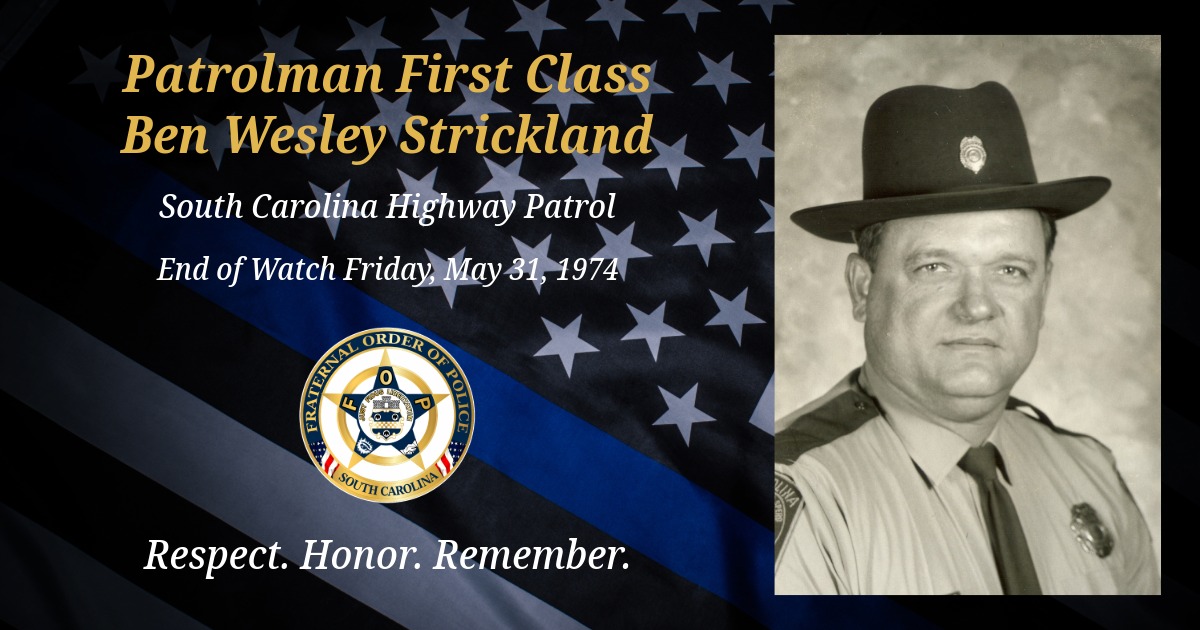
On this date in 1974, Patrolman Ben Strickland was shot and killed after making a traffic stop of a speeding car at a rest stop on I-20 near Columbia at 3:00 a.m.
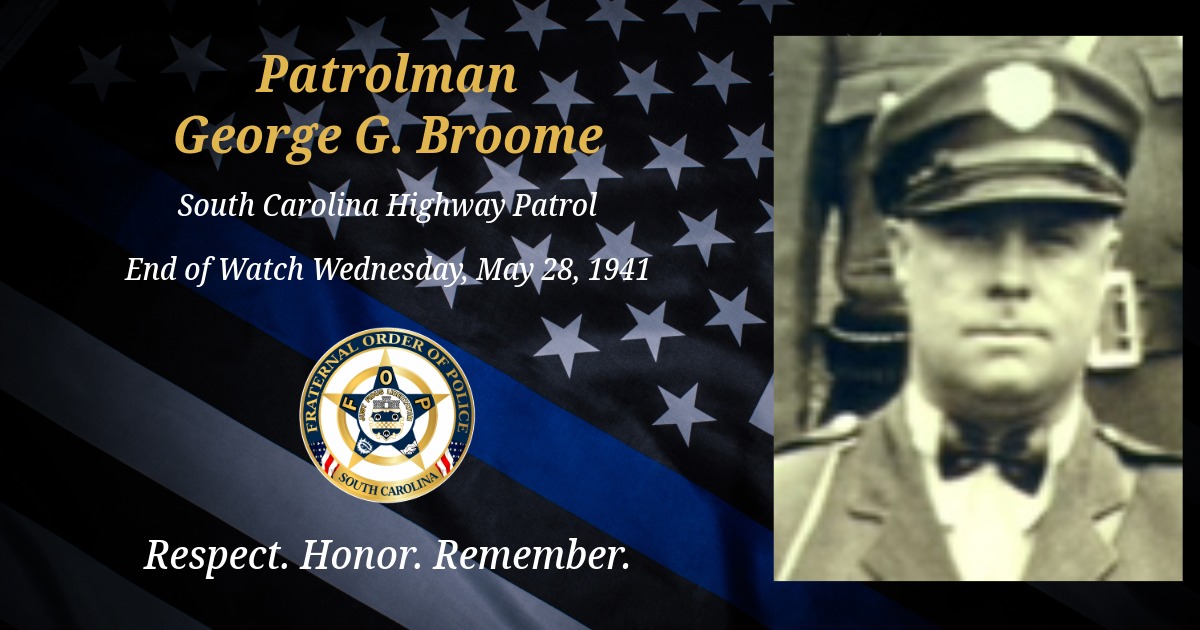
On this date in 1941, Patrolman Broome was killed in an automobile accident while on patrol in Jasper County. His vehicle struck the rear of another vehicle during a period of heavy fog.
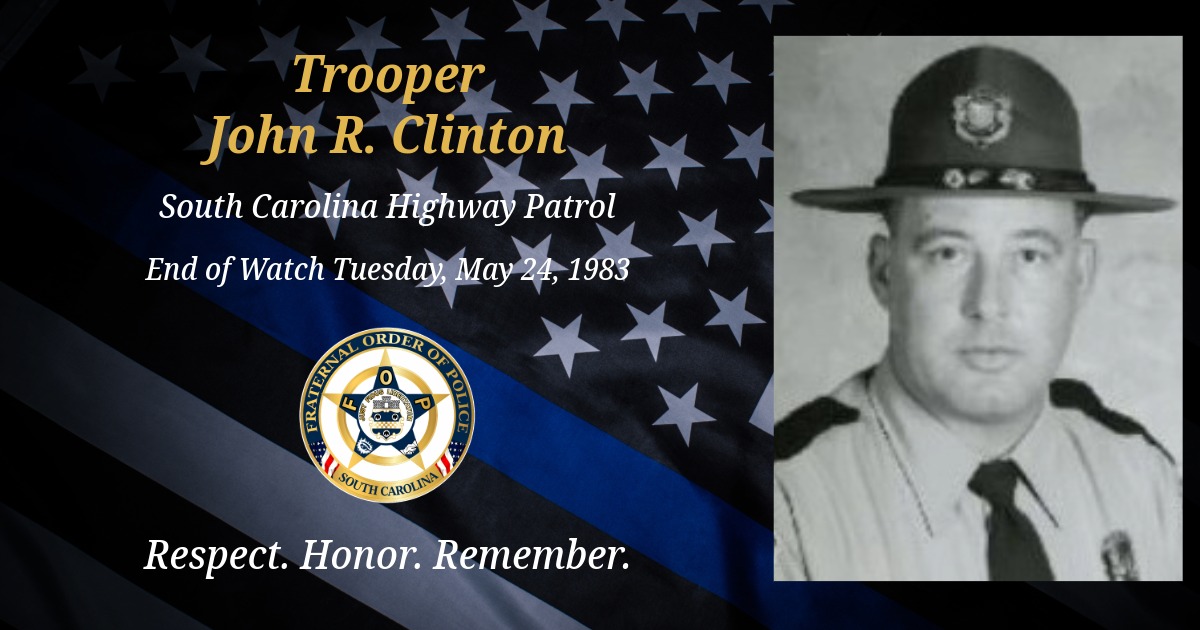
On this date in 1983, Trooper John Clinton was shot and killed with his own service weapon while attempting to make an arrest after a traffic stop at 5:30 PM on Highway 72, nine miles west of Chester.
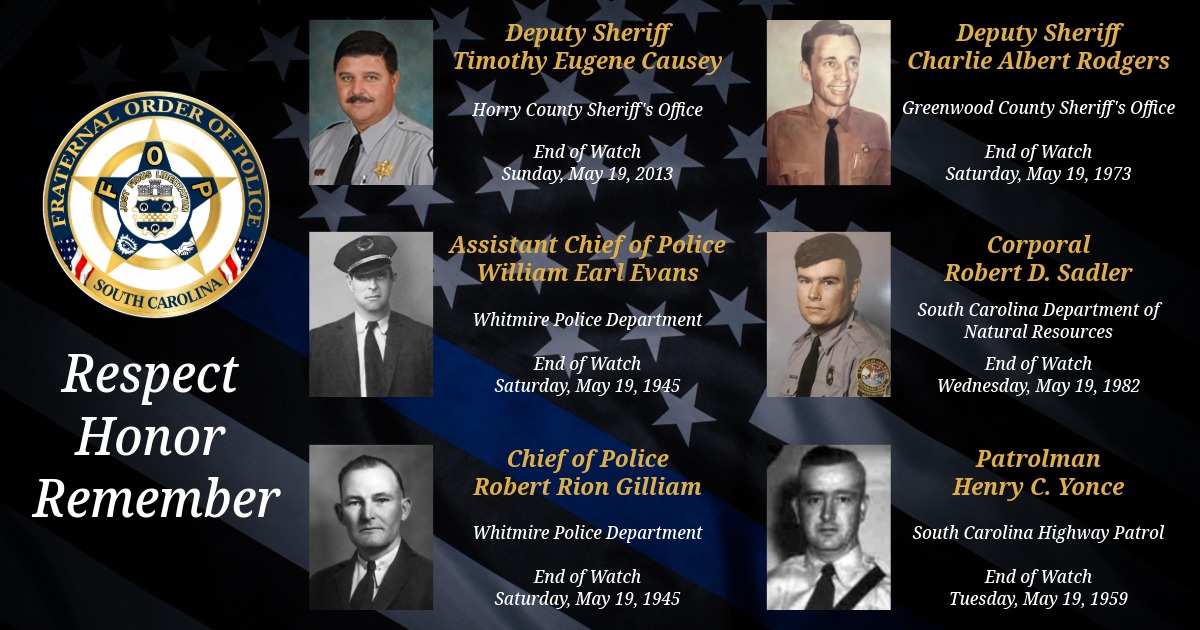
On this date in 2013, Horry County Sheriff’s Office Deputy Sheriff Timothy Eugene Causey died as a result of the smoke inhalation he suffered on March 16th, 2013, after responding to a massive fire in the Windsor Green area.
On this date in 1945, Assistant Chief William Evans and Chief Robert Gilliam were shot and killed by the father of a man they had just arrested.
On this date in 1973, Deputy Sheriff Charlie Rodgers succumbed to a gunshot wound sustained several days earlier after responding to assist Greenwood Police Department officers at the scene of an active shooting at 11:38 am.
On this date in 1982, Corporal Sadler was killed in an automobile accident while returning from a call.
On this date in 1959, Patrolman Yonce died as a result of burns received in an automobile accident that occurred when his patrol car was struck by a tractor-trailer in Greenwood County.
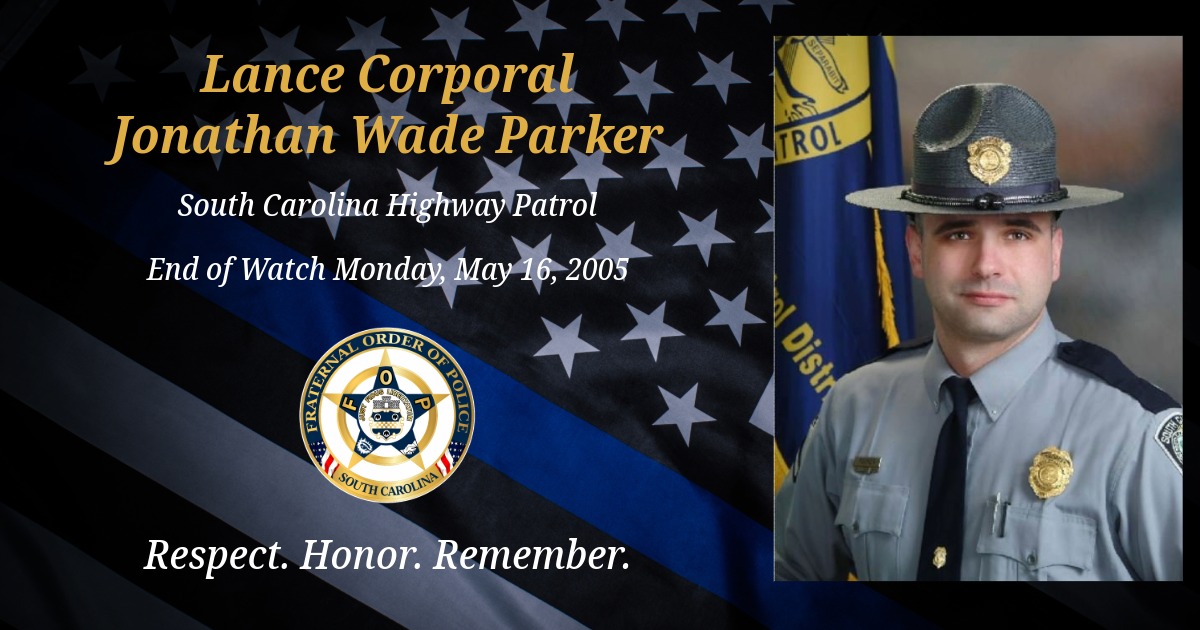
Today, we remember South Carolina Highway Patrol Lance Corporal Jonathan Wade Parker.
On this date in 2005, Trooper Jonathan Parker was killed when his patrol car was deliberately rammed during a vehicle pursuit of a robbery suspect near the intersection of Highway 527 and Highway 378 in Sumter County.