
A traffic stop on the shoulder of a highway is among the most routine responsibilities of law enforcement. Yet few assignments place an officer so close to a potentially deadly threat that cannot always be anticipated or controlled.
Vehicles pass just feet away, sometimes traveling at highway speeds. Officers must remain attentive to the motorists they encounter, the circumstances of the stop, and the traffic moving around them. A distracted driver, an unsafe lane change, or a moment of inattention can turn an ordinary encounter into a tragedy.
During Crash Responder Safety Week, November 2–6, 2026, attention turns to the dangers faced by those working along America’s roadways. For South Carolina law enforcement, those dangers carry a particularly painful reminder of the risks officers face every day.
The Loss of Trooper Dennis Ricks
On August 10, 2025, South Carolina Highway Patrol Trooper First Class Dennis D. Ricks was conducting a traffic stop along Interstate 26 in Orangeburg County when a box truck struck his patrol vehicle.
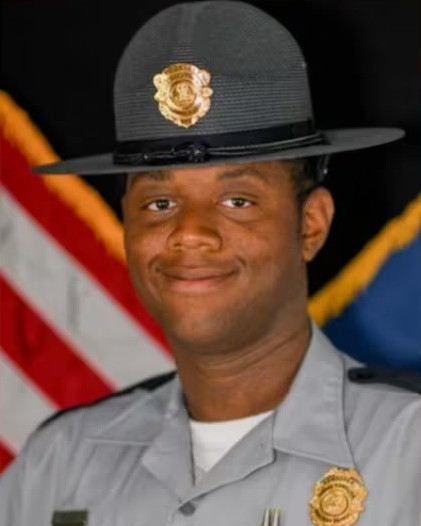
Trooper Ricks was critically injured. Despite efforts to save his life, he died from his injuries on August 13, 2025. He was 30 years old.
Assigned to Troop 7, Post B, Trooper Ricks served the communities of Orangeburg and Calhoun counties. His death brought another devastating loss to South Carolina’s law enforcement community and demonstrated the dangers that exist even during routine traffic enforcement.
He was performing a fundamental responsibility of his profession when his life was cut short.
For the officers who continue to patrol South Carolina’s highways, the circumstances of his death are painfully familiar. Every traffic stop requires officers to divide their attention between the immediate encounter and the vehicles approaching from behind.
The danger does not disappear because emergency lights are activated or a patrol vehicle is positioned on the shoulder.
The Risks Officers Face Every Day
Traffic enforcement is essential to keeping South Carolina’s roads safe. Officers investigate collisions, remove impaired drivers from the road, assist stranded motorists, and intervene when dangerous driving threatens others.
Much of that work takes place in an environment officers cannot fully control.
A patrol vehicle’s flashing blue lights alert approaching motorists, but they cannot guarantee that drivers are paying attention. An officer may be interviewing a motorist, documenting a collision, or helping someone whose vehicle has broken down while traffic continues passing nearby.
The risks extend beyond interstate highways. Traffic stops and roadside emergencies occur on rural two-lane roads, busy city streets, and highways where congestion can develop without warning.
Officers receive training to identify and manage these hazards. They take precautions to protect themselves and the public. But even the most experienced officer cannot control the actions of every approaching driver.
That responsibility also belongs to the people behind the wheel.
South Carolina’s Move Over Law
South Carolina law requires motorists approaching stopped emergency vehicles displaying flashing lights to proceed with caution and significantly reduce their speed. On qualifying multilane highways, drivers must move into a lane away from the stopped vehicle when it is possible and safe to do so. When changing lanes is impossible or unsafe, they must maintain a safe speed appropriate for roadway conditions.
In May 2026, South Carolina expanded its roadside safety requirements to include certain protections for stopped civilian vehicles displaying flashing hazard lights.
These requirements exist because the space surrounding a stopped vehicle can become dangerous without warning. For law enforcement officers, the consequences of a driver failing to slow down or provide adequate room can be devastating.
Moving over is more than a courtesy. It is a legal responsibility intended to protect people whose work or circumstances place them alongside moving traffic.
Protecting Those Who Protect South Carolina
Crash Responder Safety Week brings national attention to roadside safety, but the dangers facing law enforcement officers are present throughout the year.
Every traffic stop, collision investigation, and roadside assistance call carries risks that extend beyond the original reason an officer stopped.
For the South Carolina Fraternal Order of Police, protecting officers includes advocating for safer working conditions and ensuring the public understands the hazards officers encounter while serving their communities.
Trooper Dennis Ricks’ death is a painful example of what can happen when an officer’s work places him in the path of moving traffic. His loss continues to affect his family, fellow troopers, and the law enforcement community across South Carolina.
He was 30 years old, with a life beyond his uniform and a family expecting him home.
No traffic stop should end with an officer losing his life. No family should have to endure that loss because of a preventable roadside collision.
When motorists approach flashing blue lights, the decisions they make in those few seconds can determine whether an officer returns home safely.
Slow down. Move over. Give them room to work.