At the worst moment of a manhunt, when a suspect has run, hidden, armed himself, and decided he will not surrender, a police dog is often the first one sent into the dark.
That is not symbolism. It is not ceremony. It is the hard arithmetic of officer survival.
A police K9 enters the woods before the deputy does. A police K9 clears the hallway before the officer steps into it. A police K9 closes the distance on the violent fugitive who still has a weapon and nowhere left to go.
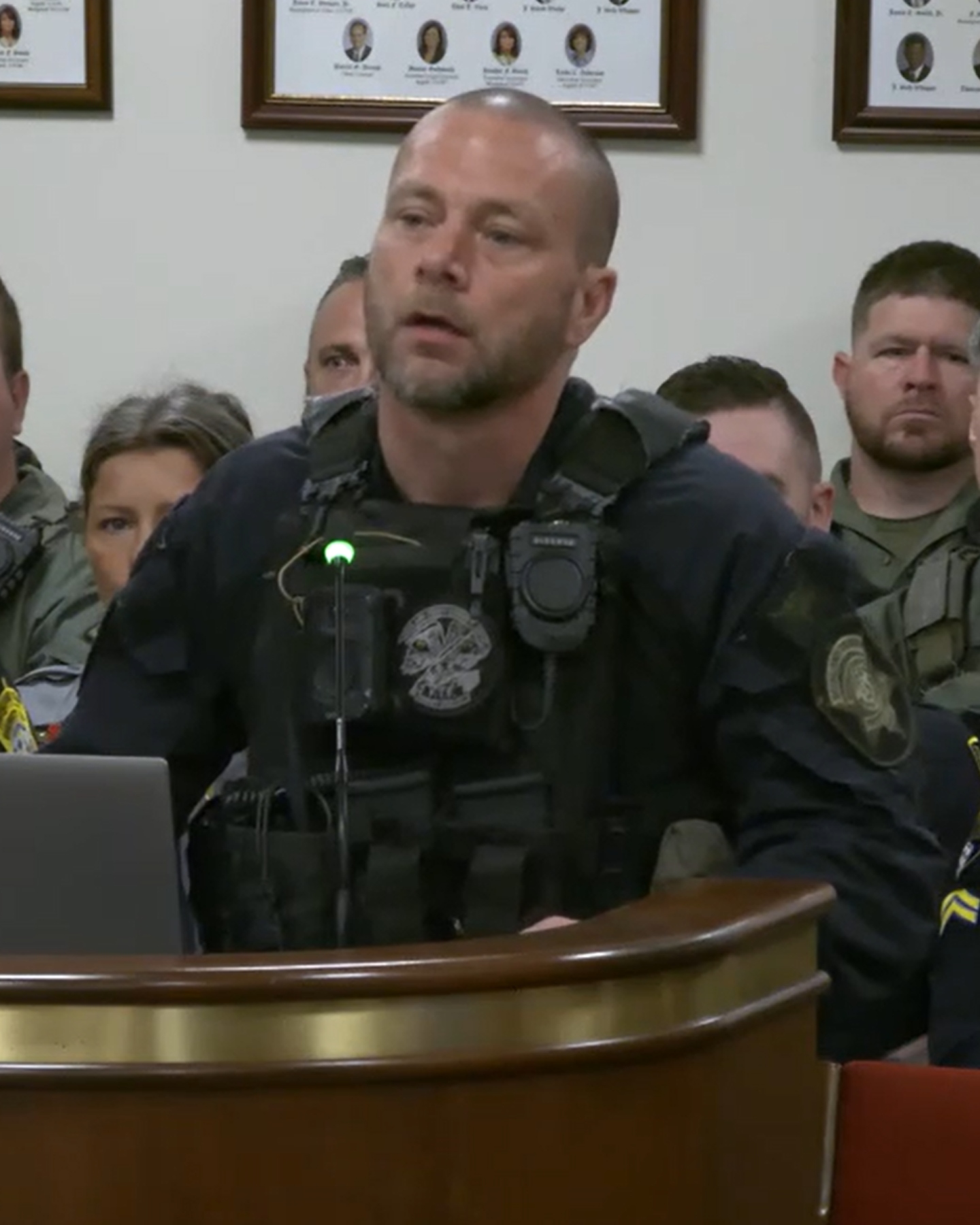
Sgt. Warren Cavanaugh, Fargo’s handler, put that reality in plain language.
“That family is leaning on that dog to bring their officer home alive.”
That sentence reaches the heart of what this legislation is about. Fargo’s, Hyco’s, Rico’s, Coba’s, Wick’s, and Mikka’s Law is not built on sentiment alone. It is built on the real work these dogs performed, the real danger they faced, and the real lives they protected.
South Carolina now has two bills before the General Assembly addressing that duty and that sacrifice.
House Bill H.3034, formally titled Fargo’s, Hyco’s, Rico’s, Coba’s, Wick’s, and Mikka’s Law, is sponsored by Representatives Collins, Wooten, C. Mitchell, Pope, Chapman, Pedalino, Hewitt, Yow, M.M. Smith, Davis, Holman, B.L. Cox, Hixon, Gagnon, Calhoon, Moss, Lawson, Kirby, Ligon, Bailey, Forrest, Gilliam, Willis, Erickson, Schuessler, Vaughan, Bradley, Hager, Whitmire, Robbins, T. Moore, Brewer, Guffey, Martin, J.L. Johnson, Haddon, Wickensimer, Brittain, Kilmartin, D. Mitchell, Cromer, and Bowers.
Senate Bill S.427 is sponsored by Senators Adams, Climer, Reichenbach, Garrett, and Fernandez.
The bills strengthen South Carolina law protecting police dogs and horses. They expand the conduct covered by the statute, increase penalties for intentionally injuring or killing a police K9, and require restitution to the law enforcement department or agency. In plain terms, the legislation moves South Carolina law closer to the reality officers and prosecutors already understand: these dogs are not replaceable equipment. They are working partners deployed in moments when lives are already in danger.
The names attached to this legislation matter because each one belongs to a dog that was sent where danger was certain and hesitation was impossible.
Fargo (Richland County Sheriff’s Department)
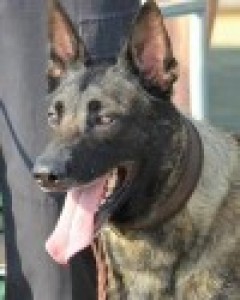
Fargo died in the kind of moment every handler knows can turn final without warning.
An armed robbery suspect fled in Richland County. Deputies hunted for him near Monticello Road in Columbia. When Fargo was released, he did what police dogs are trained to do. He found the suspect, caught him, and locked on. Then the suspect shot him. Fargo was killed in the act of stopping an armed man from escaping and in the act of standing between that man and the deputies closing in behind him.
There is a terrible clarity to Fargo’s death. He was not lost in the background of an operation. He was at the point of danger, exactly where he had been sent to be. The suspect’s gunfire did not just kill a dog. It struck a law enforcement partner in the moment that partner was protecting human officers from a violent fugitive.
That is why Fargo’s name belongs on this bill. His death was not abstract. It was the cost of keeping other officers alive.
Hyco (Anderson County Sheriff’s Office)
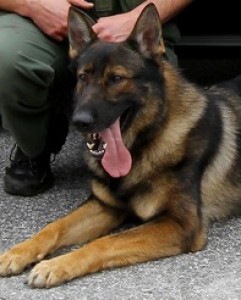
Hyco’s final call began with a violent pursuit and ended in gunfire.
Anderson County deputies were dealing with suspects connected to a reported carjacking. After a pursuit, the suspects ran. Hyco went after them into the woods. He found one of them, bit down, and did the job he had been trained to do. In that struggle, he was shot and killed.
The details of Hyco’s death strip away every comfortable illusion people may hold about police K9s. These dogs are not mascots riding in the back of patrol vehicles. They are sent into brush, darkness, confusion, and close contact with desperate offenders. Hyco found the suspect deputies were searching for, and he paid for that success with his life.
His story belongs in this law because it captures the exact burden the law is meant to recognize. A K9 is sent first because the danger is real. When that danger becomes fatal, the law should not look away from what happened.
Rico (South Carolina Law Enforcement Division)
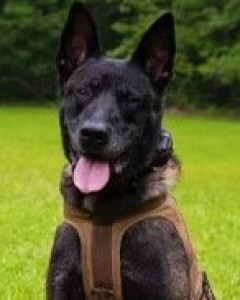
Rico was deployed in one of the most dangerous circumstances law enforcement can face: an armed suspect inside a house after a shooting spree that had already left victims behind.
On Johns Island, authorities were searching for Ernest Robert Burbage III, who was wanted in connection with shootings that wounded two people, including a Charleston County deputy. Officers used a robot as part of the effort to locate him. Then Rico was sent inside to search the residence in places the robot could not reach. He was shot and killed almost immediately. Officials said Rico’s actions likely saved lives because they exposed the suspect’s position before officers walked into that house themselves.
That is the part of police work the public rarely sees clearly enough. A K9 is often the difference between officers entering blind and officers entering with warning. Rico did not die in a ceremonial role. He died in the most unforgiving corner of modern policing, inside a structure where an armed suspect was waiting for the next target.
His name belongs in this legislation because the law should reflect what his service required and what his death prevented.
Coba (South Carolina Law Enforcement Division)
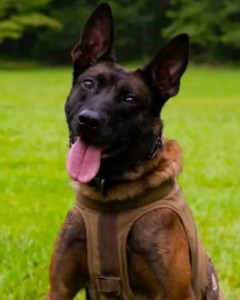
Coba’s death came in a hallway, in the close quarters where law enforcement encounters turn lethal in an instant.
SLED officers and deputies were serving a felony burglary warrant in Newberry County. As Coba, his handler, and deputies moved through the residence, the suspect suddenly produced a firearm. Coba was shot in the hallway, and the suspect then turned the weapon toward the officers entering behind him. Coba later died from his injuries.
There is no cleaner illustration of a police K9’s mission than that narrow stretch of hallway. Coba went forward first. He met the violence first. He revealed the threat before the officers behind him absorbed it themselves. In a building entry, there is no wasted motion and no meaningless role. Every second matters. Every step forward is taken with the understanding that someone may be waiting with a gun.
Coba’s name belongs in this law because his death makes plain what police K9s do for the men and women beside them. They do not just help an operation. They change who survives it.
Wick (Richland County Sheriff’s Department)
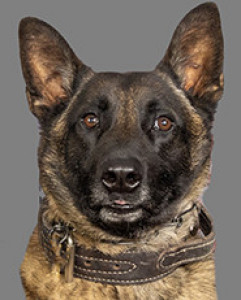
Wick died in pursuit, in the kind of fast, violent, unpredictable chase where one decision can send a suspect into traffic, across a median, or into a neighborhood before deputies can close the gap.
Richland County deputies were chasing a suspect in a stolen vehicle on Interstate 77. The suspect fled on foot after stop sticks were used. Wick was deployed. During the pursuit, his leash broke, and as he chased the suspect across the interstate, he was struck by a vehicle and killed.
His death did not come at the end of a quiet patrol shift. It came in motion, at highway speed, in a pursuit triggered by a fleeing suspect. Even without a gunshot, the truth remains the same. Wick died because he was doing the work of apprehending a dangerous suspect who refused to stop. He died because the job required him to run toward risk while deputies drove the pursuit forward.
That is why Wick’s name belongs in this legislation. The danger police K9s face is not limited to bullets. It follows every pursuit, every deployment, every moment they are sent ahead of the officers depending on them.
Mikka (Lee County Sheriff’s Office)
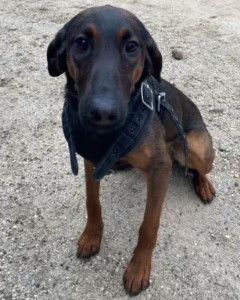
Mikka died in one of the most chaotic and haunting scenes any agency can face.
A man wanted in the shooting of a McBee officer was found in Lee County after a long manhunt. What followed was an intense standoff and shootout. During that confrontation, Mikka’s handler’s patrol car caught fire. Mikka was inside. She died as gunfire and flames turned the scene into catastrophe.
There is a brutality to that story that should stop any honest reader cold. Mikka was part of the law enforcement response to a suspect already accused of shooting an officer. She was present because the situation was dangerous enough to require every available tool, every trained deputy, every layer of protection. When the violence peaked, she was caught inside it and never came home.
Her name belongs in this law because her death shows, with devastating force, that police K9s are woven into the same dangerous operations that wound officers, trap officers, and take lives.
Why South Carolina Law Must Catch Up
The strongest argument for this legislation is the simplest one. South Carolina law should reflect the reality of police work.
These dogs track armed suspects through woods and neighborhoods. They enter houses where officers know someone may be waiting with a weapon. They pursue fugitives who have already shown they are willing to run, fight, or shoot. They are trained at great expense, handled with extraordinary care, and deployed only because the stakes are high enough to justify sending them into danger first.
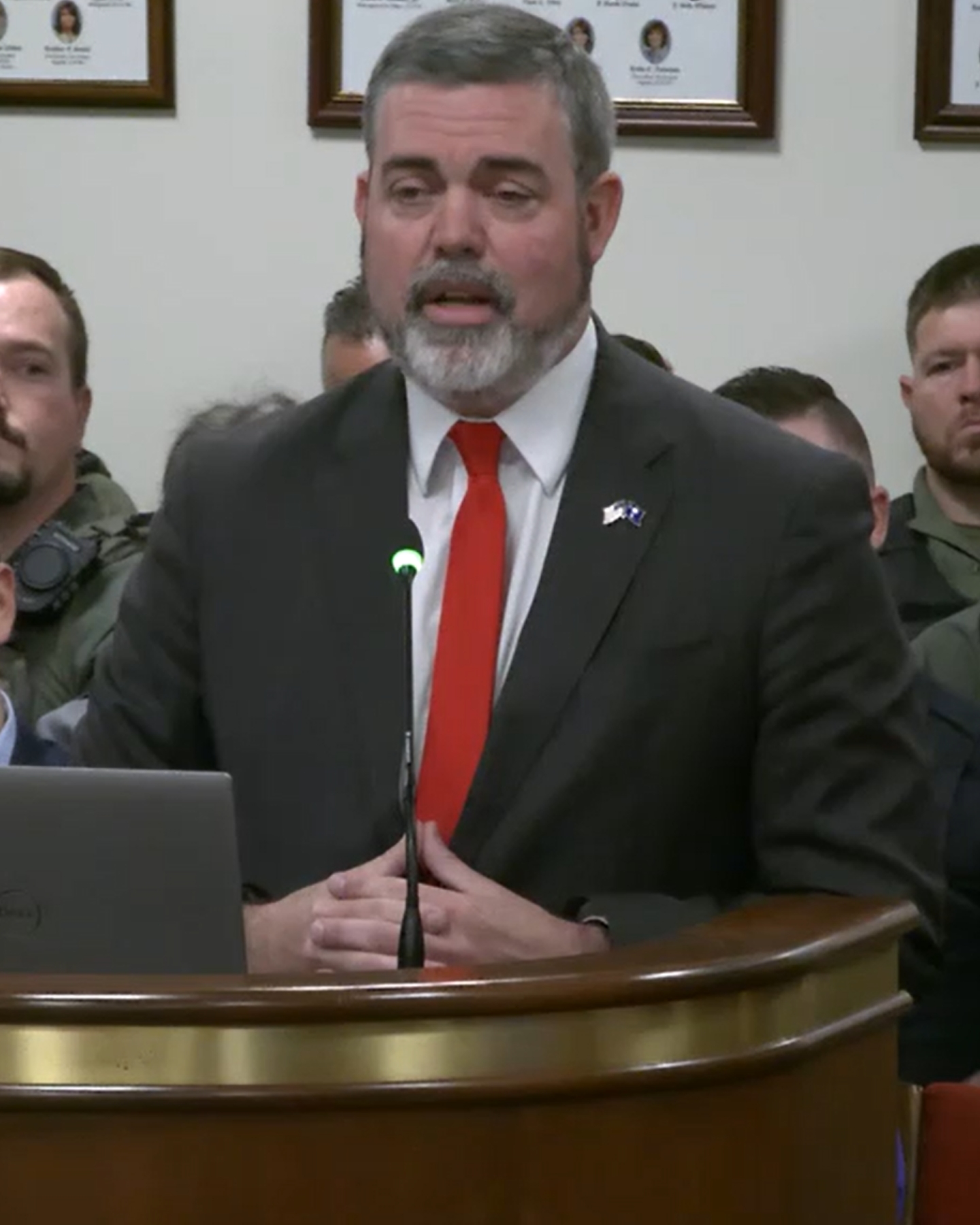
That is why David Stumbo, Solicitor for the Eighth Circuit, captured the disconnect so sharply when he said,
“When People hear that killing a K9 in the line of duty only carries 5 years in prison, they are stunned.”
He is right about the public reaction because the public understands more than critics sometimes admit. South Carolinians know what they are looking at when they see a police dog deployed during a violent confrontation. They know that dog is there to protect human life. They know that dog is not ornamental. They know that dog is not incidental. They know that dog is performing a dangerous public duty in the seconds when everything can go wrong.
The law should say the same thing with equal clarity.
This legislation does not ask the General Assembly to indulge emotion. It asks the law to recognize function, sacrifice, and consequence. It asks South Carolina to acknowledge that when a police K9 is intentionally injured or killed in the line of duty, the act strikes at a law enforcement operation already under threat and at the officers whose safety depends on that animal’s training and courage.
The Names on the Bill
Fargo.
Hyco.
Rico.
Coba.
Wick.
Mikka.
Six names. Six police dogs. Six line of duty deaths that reveal the same truth from different angles.
A police K9 is sent where the risk is highest. A police K9 enters the space an officer would otherwise have to enter first. A police K9 does not get the luxury of hesitation, distance, or second-guessing. The dog goes because the handler gives the command and because another officer’s family is waiting for that officer to come home.
That is why Sgt. Cavanaugh’s words cut through everything else.
“That family is leaning on that dog to bring their officer home alive.”
Each of these dogs did exactly that.
They went first.
South Carolina’s law should recognize what that means.