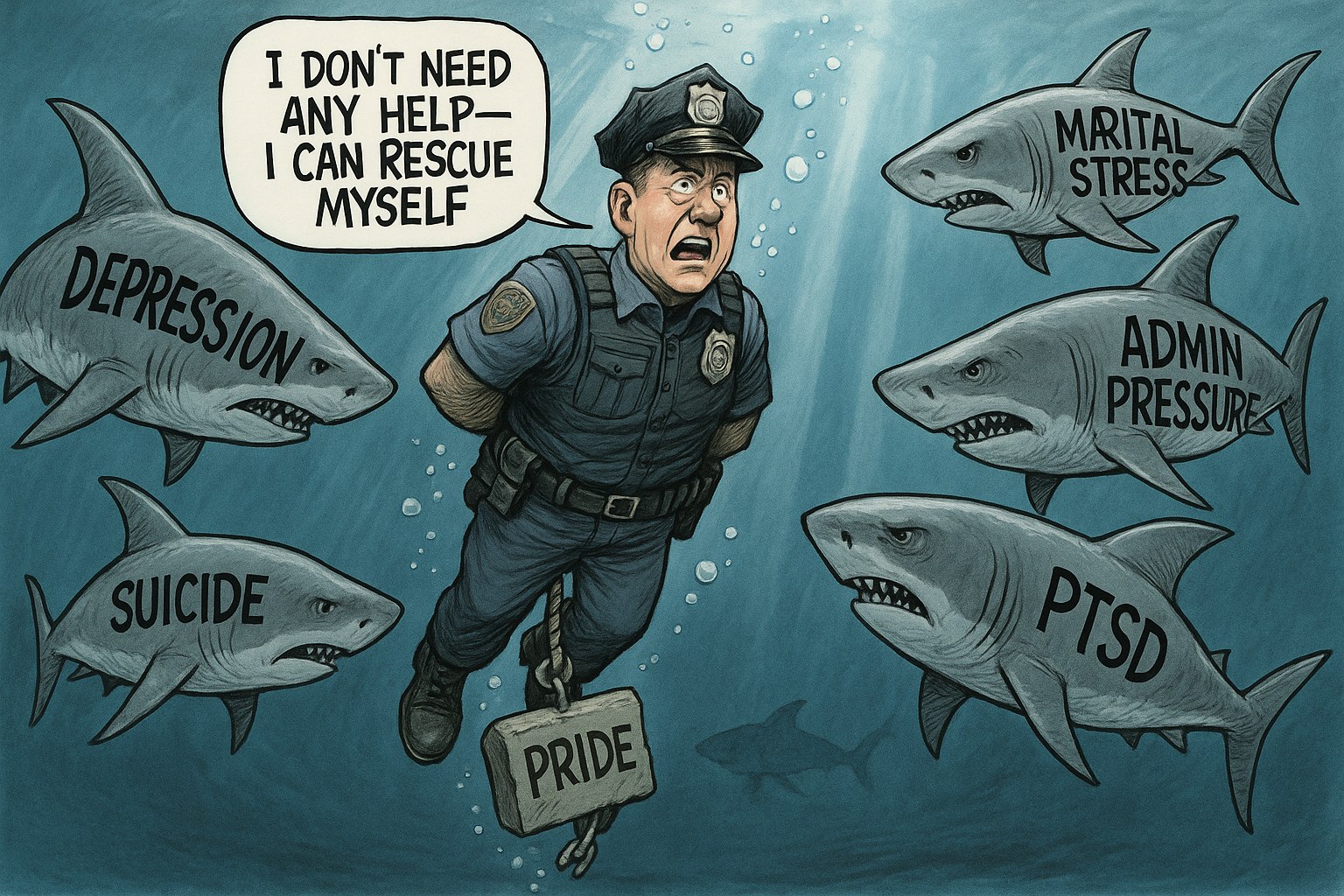
Law enforcement is a profession built on strength, discipline, and commitment. Every day, officers step into situations most people will never encounter. The public sees the uniform, the authority, and the response. What is not always visible is the cumulative weight carried over the course of a career.
Research highlighted by the Federal Bureau of Investigation Law Enforcement Bulletin shows that officers may experience an average of 178 critical incidents throughout their careers. By comparison, the average person may encounter only a few traumatic events in a lifetime. That difference is not just a statistic. It is a reality that shapes how officers think, react, and carry stress over time.
This profession demands resilience. It also requires recognition that no one carries that weight alone.
Mental Health Awareness Month is an opportunity to address a reality that has existed for generations in law enforcement. The cumulative impact of critical incidents, long hours, public scrutiny, and the responsibility to act in uncertain situations creates a level of stress that cannot be ignored. For too long, the culture has encouraged officers to push forward without acknowledging the toll. That approach does not strengthen the profession. It isolates those who need support the most.
The South Carolina Fraternal Order of Police exists to stand in that gap.
Support within the Fraternal Order of Police is not limited to one program or one moment. It is built into the foundation of what the organization represents. The Legal Defense Plan provides more than representation. It provides peace of mind during some of the most stressful moments an officer can face, removing uncertainty when it matters most. Training initiatives equip officers with the knowledge to respond not only to external threats but to the internal challenges that come with the job. Legislative advocacy works to improve working conditions and protect the rights of those who serve, reducing pressures that contribute to long-term stress.
Equally important is the strength found in the fraternal network itself. The connection between officers, across agencies and across the state, creates a support system that cannot be replicated elsewhere. Officers understand each other in ways others cannot. That shared experience matters.
Programs like the South Carolina Law Enforcement Assistance Program (SCLEAP) provide confidential support and resources for officers dealing with stress, trauma, or personal challenges, ensuring help is available when it is needed most.
Addressing mental health in law enforcement requires more than awareness. It requires action. It requires leadership at every level to reinforce a simple truth: seeking support is not a weakness. It is a decision to remain effective, prepared, and present for the next call, the next shift, and the next challenge.
It also requires officers to look out for one another. The signs are not always obvious. A change in behavior, withdrawal, or increased stress can go unnoticed in a profession that is always moving. Taking the time to check on a fellow officer is not an extra step. It is part of the responsibility that comes with the badge.
The strength of this profession has always been rooted in unity.
The mission of the South Carolina Fraternal Order of Police is to ensure that no officer faces these challenges alone. Whether through advocacy, training, legal protection, or direct support, the commitment remains the same. Officers deserve to go home not only physically safe, but mentally strong and supported.
This month serves as a reminder, but the responsibility does not end here.
- Check on your fellow officers.
- Use the resources available to you.
- Stay engaged with your local lodge and the support network it provides.
- Take the steps necessary to protect your own well-being.
In unity there is strength. That principle has guided this organization and this profession for generations. It will continue to guide us forward.