
Memphis, Tennessee. October 3, 1974.

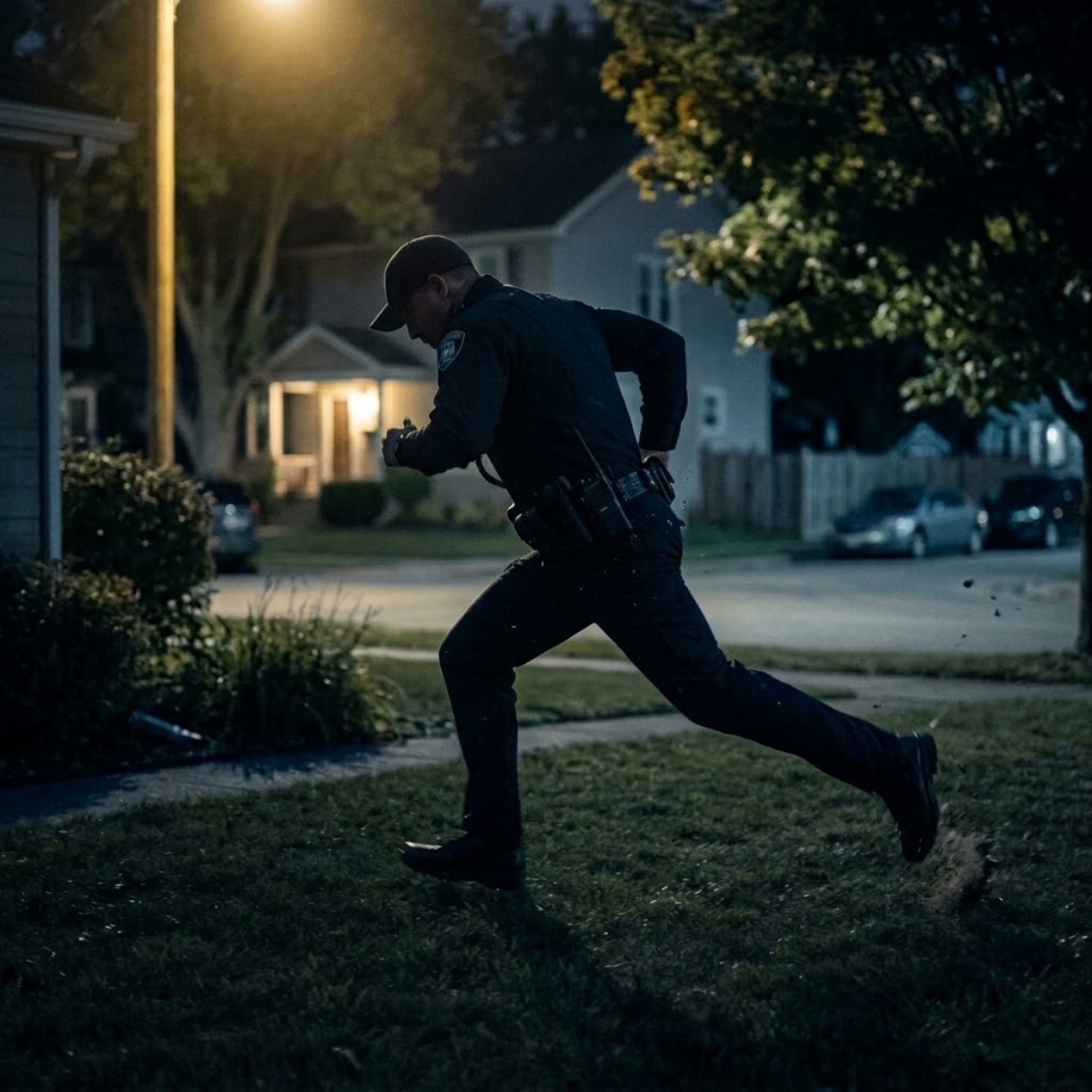
The call came in as a burglary in progress. A homeowner had heard glass breaking next door and called police. Officer Elton Hymon responded, arriving in a quiet residential neighborhood just after dark. As he approached the house, he saw movement.
A young suspect ran.
Hymon gave chase, pursuing the figure across a yard toward a fence at the edge of the property. The suspect was small in stature. As he reached the fence, he began to climb.
Hymon shouted for him to stop.
He didn’t.
In that moment, the officer made a decision consistent with the law and police training of the time. Under Tennessee law and long-standing common law, officers were permitted to use deadly force to stop a fleeing felony suspect.
Officer Hymon fired one shot.
The suspect fell.
He was fifteen-year-old Edward Garner. He was unarmed. Ten dollars and a purse taken from the home were later found on him. He died at the hospital.
What began as a routine burglary response would ultimately reach the highest court in the nation and permanently reshape how law enforcement officers use deadly force.
A Case That Reached the Nation’s Highest Court
Garner’s father filed a civil lawsuit, arguing that the use of deadly force against his unarmed son violated the Constitution. The case moved through the federal courts, where judges were forced to confront a question that had existed for centuries but had rarely been examined under modern constitutional standards.
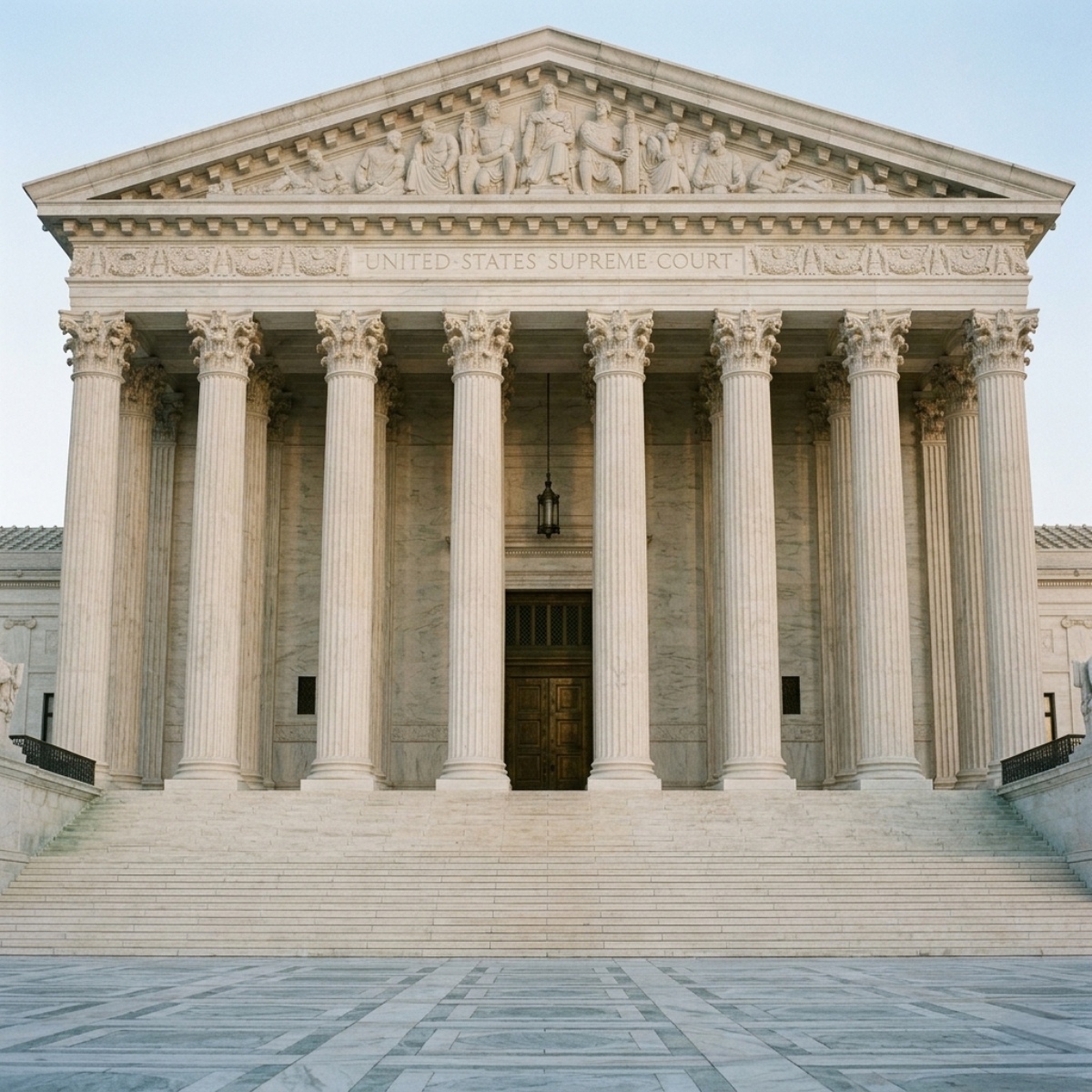
At the heart of the case was an old legal doctrine known as the “fleeing felon rule.” Under English common law, officers were authorized to use whatever force was necessary, including deadly force, to prevent the escape of a felony suspect. At the time those rules were written, most felonies were punishable by death. Preventing escape was considered essential to justice.
But by the twentieth century, the nature of crime, policing, and the justice system had changed dramatically.
The question before the Supreme Court of the United States was simple, but its implications were enormous:
Could an officer constitutionally use deadly force against an unarmed suspect who was fleeing but did not pose an immediate threat?
On March 27, 1985, the Court delivered its answer.
A New Constitutional Standard
In a 6–3 decision, the Supreme Court ruled that the use of deadly force to prevent escape is a seizure under the Fourth Amendment and must be reasonable.
The Court held that deadly force may not be used simply to stop a fleeing suspect. Instead, officers must have probable cause to believe the suspect poses a significant threat of death or serious physical injury to the officer or others.
The ruling recognized the reality officers face. Foot pursuits are unpredictable. Decisions unfold in seconds. But the Constitution requires that the level of force used be proportional to the threat presented.
The Court acknowledged that if a suspect threatens an officer with a weapon, or if there is probable cause to believe the suspect has committed a crime involving serious physical harm, deadly force may be constitutionally reasonable.
But the blanket authority to use deadly force against any fleeing felony suspect was no longer constitutional.
Justice Sandra Day O’Connor, joined by Chief Justice Warren Burger and Justice William Rehnquist, dissented. They warned that courts reviewing events years later could not fully replicate the uncertainty officers face in the moment. Their concern reflected the difficult balance between public safety and constitutional protections that officers navigate every day.
The majority decision, however, established a new national standard.
Policing After Garner
The impact of the ruling was immediate.
Law enforcement agencies across the country were required to review and revise their use-of-force policies. Training academies updated their curriculum. Departments adopted clearer guidance defining when deadly force could be used.
The decision reinforced that deadly force is not defined by the severity of the suspected crime alone, but by the threat posed.
Officers continued to pursue suspects. They continued to protect communities. But the constitutional framework governing deadly force had been permanently clarified.
This was not the end of the legal evolution. In many ways, it was the beginning.
The Standard That Still Guides Officers Today
Four years later, in Graham v. Connor (1989), the Supreme Court established the broader framework used to evaluate all police force. The Court ruled that use-of-force decisions must be judged based on “objective reasonableness,” viewed from the perspective of a reasonable officer at the scene, not with the benefit of hindsight.
Together, Garner and Graham became the foundation of modern use-of-force law.
Subsequent cases continued to apply and clarify these principles.
In Brower v. County of Inyo (1989), the Court defined when police actions constitute a constitutional seizure. In Brosseau v. Haugen (2004), the Court examined deadly force used against a fleeing suspect in a vehicle, recognizing the danger such situations present.
In Scott v. Harris (2007), the Court ruled that officers may use deadly force to stop a vehicle pursuit when the fleeing suspect poses a substantial risk to others on the road. The decision acknowledged the danger high-speed pursuits create for innocent motorists and officers alike.
In Plumhoff v. Rickard (2014), the Court reaffirmed that officers may use deadly force to end a dangerous vehicle pursuit when the threat to public safety is severe. In Mullenix v. Luna (2015), the Court again addressed deadly force during a high-speed pursuit, reinforcing the principle that officers must make decisions based on rapidly evolving threats.
Each of these decisions built upon the constitutional foundation established in Tennessee v. Garner.
A Legacy That Endures
Today, every law enforcement officer in the United States is trained within the constitutional framework shaped by that night in Memphis.
Foot pursuits remain among the most unpredictable and dangerous situations officers encounter. Decisions unfold in seconds, often in darkness, uncertainty, and risk. The law does not eliminate those realities, but it provides a clear standard rooted in reasonableness and threat assessment.
The legacy of Tennessee v. Garner is not defined by a single moment, but by the clarity it brought to the profession. It established a constitutional boundary that continues to guide officers, departments, courts, and communities.
March 27, 1985 marked a turning point. A foot pursuit that began in a quiet neighborhood became a Supreme Court decision that reshaped policing across the nation.
Its influence continues to be felt every time an officer makes the decision to pursue, to stop, and to protect.