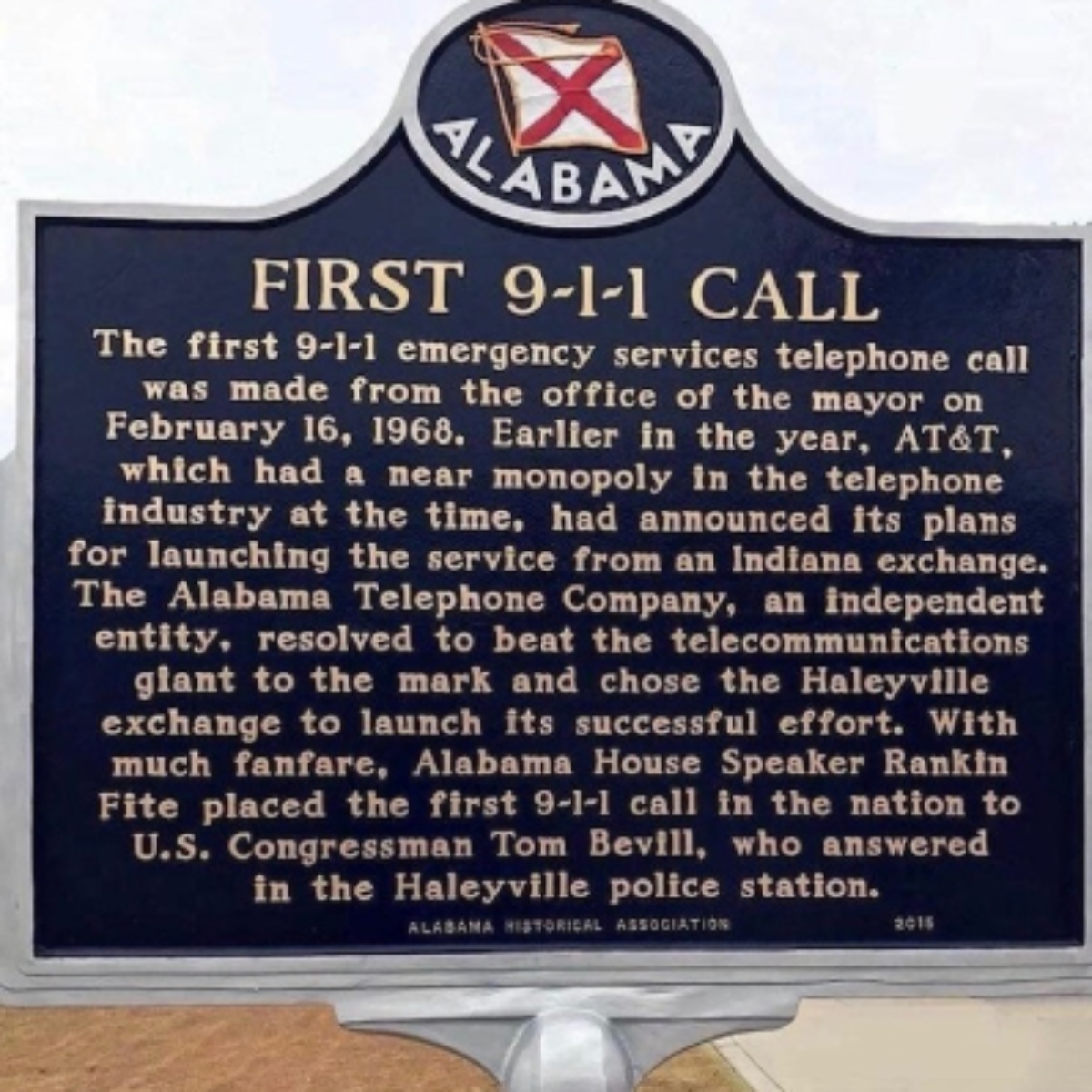
On February 16, 1968, a simple three-digit number changed public safety in the United States forever.
In the small town of Haleyville, a call was placed that would quietly reshape how law enforcement, firefighters, and emergency medical personnel respond to crisis. It was the first official use of 9-1-1 as a universal emergency number.
At the time, there was nothing routine about it.
Before 9-1-1, citizens in distress faced a confusing reality. Emergency phone numbers varied by city, by agency, and sometimes by neighborhood. In moments of fear or danger, people were expected to remember local numbers for police, fire, or medical help, often while under extreme stress. Delays were common. Confusion was deadly.
The idea behind 9-1-1 was radical in its simplicity: one number, anywhere, at any time, connecting the public directly to help.
That idea became reality on February 16, 1968.
The first call was routed to local law enforcement, demonstrating what would become the backbone of modern emergency response. Law enforcement dispatchers, already accustomed to managing chaos through radios and telephones, became the first point of contact for citizens facing emergencies of every kind.
From that moment forward, policing was no longer just reactive. It became immediate.
For officers, the introduction of 9-1-1 fundamentally altered the rhythm of the job. Calls for service increased in volume but improved in clarity. Dispatch centers evolved into command hubs, coordinating patrol units, fire response, and medical aid with speed that had not been possible before.
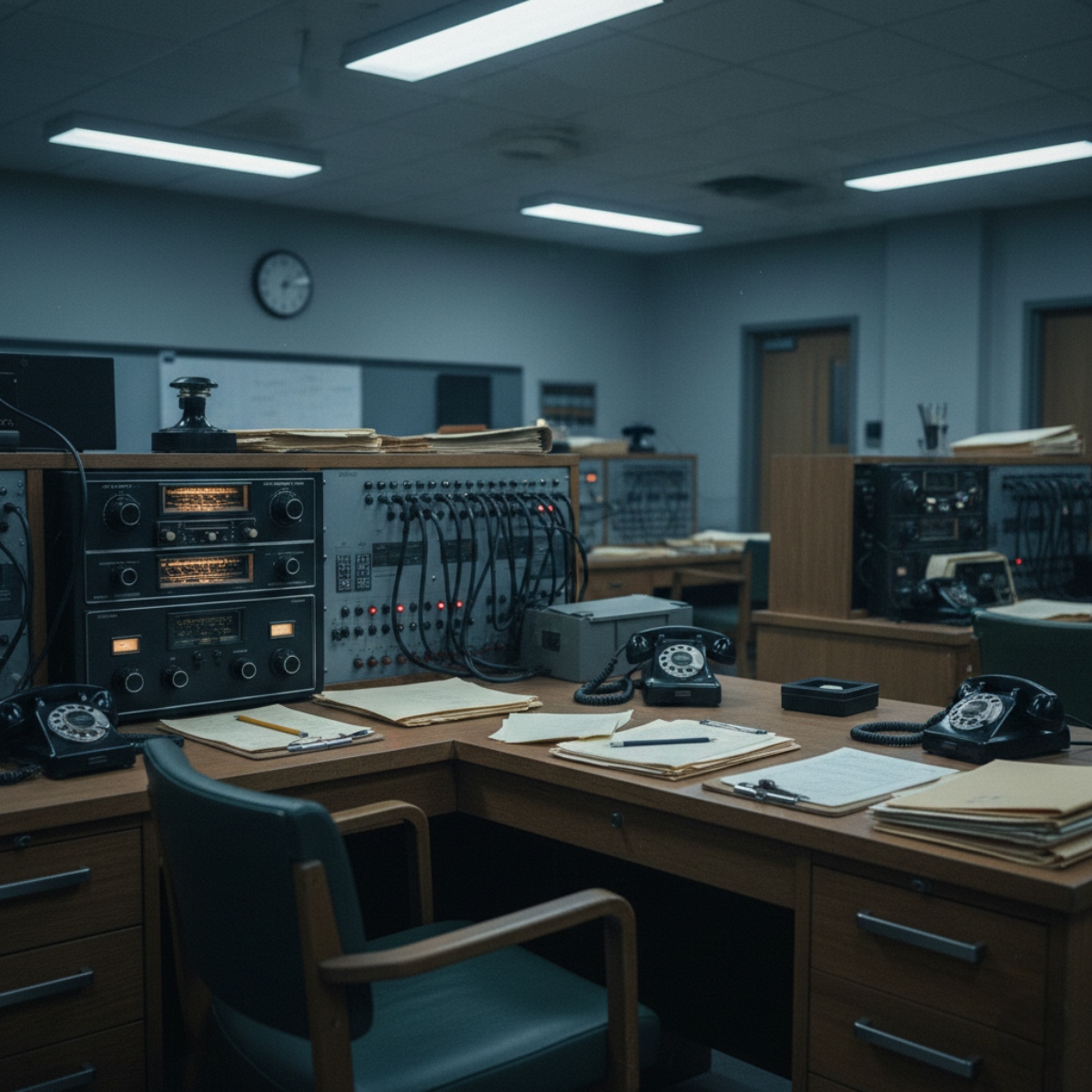
Response times shortened. Information improved. Officer safety increased.
Over time, 9-1-1 systems grew more sophisticated. Enhanced 9-1-1 brought caller location data. Wireless 9-1-1 followed as cell phones became common. Today, next-generation 9-1-1 systems integrate text, images, and real-time data, all building on that first call placed in 1968.
Yet the core mission remains unchanged: connect people in crisis with trained professionals who can respond immediately.
Law enforcement has always stood at the center of that mission. Officers are often the first to arrive. They assess the scene, secure safety, provide aid, and coordinate with other responders. The ability to receive timely, accurate information from a dispatcher can mean the difference between control and chaos, between preparation and surprise.
In South Carolina, as in every state, 9-1-1 is woven into the fabric of daily policing. Dispatchers and officers operate as a single team, linked by technology but bound by trust, training, and experience. Every call begins a chain of decisions that officers carry forward on the street.
Looking back, February 16, 1968 stands as one of the most consequential moments in public safety history not because of spectacle, but because of access. It placed emergency response within reach of every citizen, regardless of location, education, or circumstance.
Three digits. One call. A nationwide transformation.
The first 9-1-1 call reminds us that progress in policing is often built not on force or authority, but on communication. On ensuring that when someone needs help, the path to law enforcement is clear, immediate, and reliable.
That promise, first tested in a small Alabama town, continues to guide public safety every day.