On September 24, 2025, the South Carolina parole board rejected the release of the man convicted of murdering Cottageville Police Chief Jerry Wayne Shelton. For the law enforcement community, the hearing was not just another item on the calendar. It was a solemn reminder of the sacrifice Chief Shelton made in 1989 and of the enduring responsibility to ensure that justice is never diluted for those who kill police officers.
A Tragic Night in Cottageville
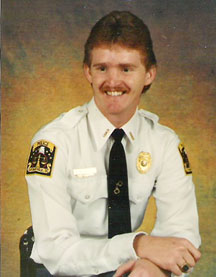
Chief Jerry Wayne Shelton’s End of Watch came on March 25, 1989, following what began as a routine traffic stop. Late that evening, he pulled over a pickup truck speeding through town near the Cottageville Methodist Church. Inside were a young man and woman, along with open containers of alcohol and small amounts of marijuana and cocaine. Understanding the seriousness of what he had found, Chief Shelton called for another officer to assist.
The suspects were transported to the Cottageville Town Hall, which also served as the police station. Throughout the stop and questioning, they appeared cooperative. Confident that the situation was under control, Chief Shelton sent the assisting officer home and continued the process on his own.
In the early morning hours, that appearance of cooperation turned into violence. The female suspect revealed a hidden handgun and passed it to her boyfriend. In an instant, the man opened fire, shooting Chief Shelton seven times. His service weapon and patrol car were stolen as the two fled into the night. His body was discovered later that day, sparking a manhunt that gripped the state until the fugitives were located weeks later.
Chief Shelton had served as Cottageville’s Chief of Police for just over a year. Before leading the department, he worked as a paramedic and graduated from the South Carolina Criminal Justice Academy in 1987. He was known as a dedicated public servant whose commitment to the community was unmistakable. He was survived by his parents, three brothers, two sisters, and his fiancée, who was left to carry the weight of a future that would never come.
Why Parole Must Never Be Considered
The parole board’s decision this September was just. Yet it is troubling that such a question can even be asked. The murder of a police officer is not a crime that fades with time, nor is it one that should be reopened for reconsideration. It is a permanent act, and its consequences remain permanent for the families, colleagues, and communities left behind.
South Carolina has seen too many officers fall in the line of duty. Each life taken is a wound not just to a family or department, but to the entire profession. To parole those convicted of such crimes would dishonor the sacrifice of the fallen, endanger the public, and embolden those who contemplate violence against law enforcement.
Law enforcement officers stand as the last line of defense between order and chaos. When one is killed in service, the loss reverberates far beyond the department they represent. It shakes confidence in community safety, places additional strain on officers already facing immense challenges, and sends a dangerous signal that the gravest crime against society’s guardians can one day be excused.
Justice Demands Permanence
The principle must be clear: killers of law enforcement officers should never be released. To allow parole in these cases would be an affront to justice and a betrayal of every officer who risks everything to protect others.
As John Blackmon, President of the South Carolina Fraternal Order of Police, has stated:
“The South Carolina Fraternal Order of Police stands firmly against the release of anyone who has taken the life of a law enforcement officer. To parole such an individual would be an affront to justice and a betrayal of every officer who puts on the badge.”
The parole board’s decision in Chief Shelton’s case was correct, but it must also stand as a lasting commitment for all cases like it.
The people of South Carolina deserve to know that when an officer’s life is taken in the line of duty, the punishment will be certain and final. This is not a matter of revenge. It is about justice, deterrence, and the recognition that targeting an officer is an attack on the foundation of public safety itself.
Honoring Chief Shelton’s Legacy
Chief Shelton’s life and service remind us of the dangers faced daily by law enforcement officers and of the courage required to bear that responsibility. His death was a tragedy, but his sacrifice continues to underscore the values of duty, honor, and justice that define the profession.
By denying parole, the state has ensured that the man responsible will never again walk free. Yet the work is not finished. For every fallen officer, for every family who bears the burden of loss, and for every community that depends on those who wear the badge, the message must remain steadfast: those who kill law enforcement officers will never be granted release.
Chief Shelton’s sacrifice will never be forgotten. His legacy endures in the courage of his fellow officers, the gratitude of the community he served, and the unshakable truth that justice must be permanent for those who take the lives of society’s protectors.